The Misconception Behind “Attacks”

IMG_6992

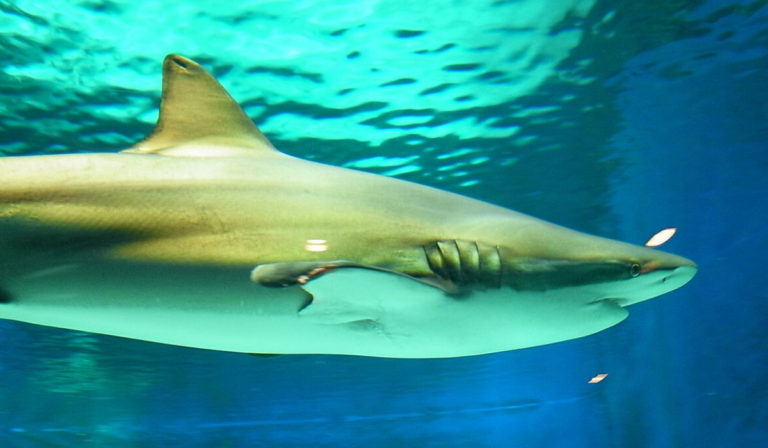
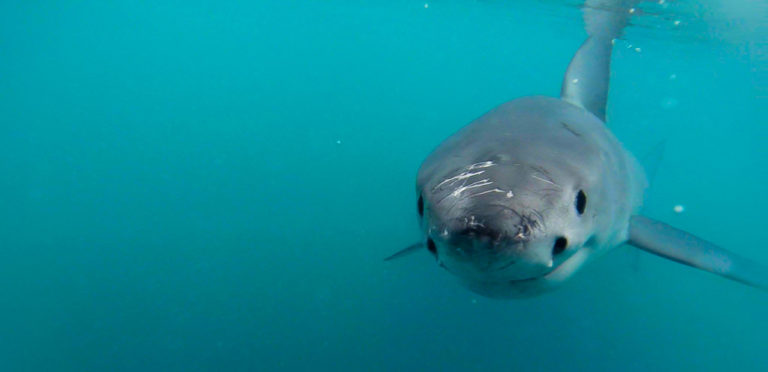
The shark bit a piece of kelp to figure out what it was, even though there were fish heads right next to it.

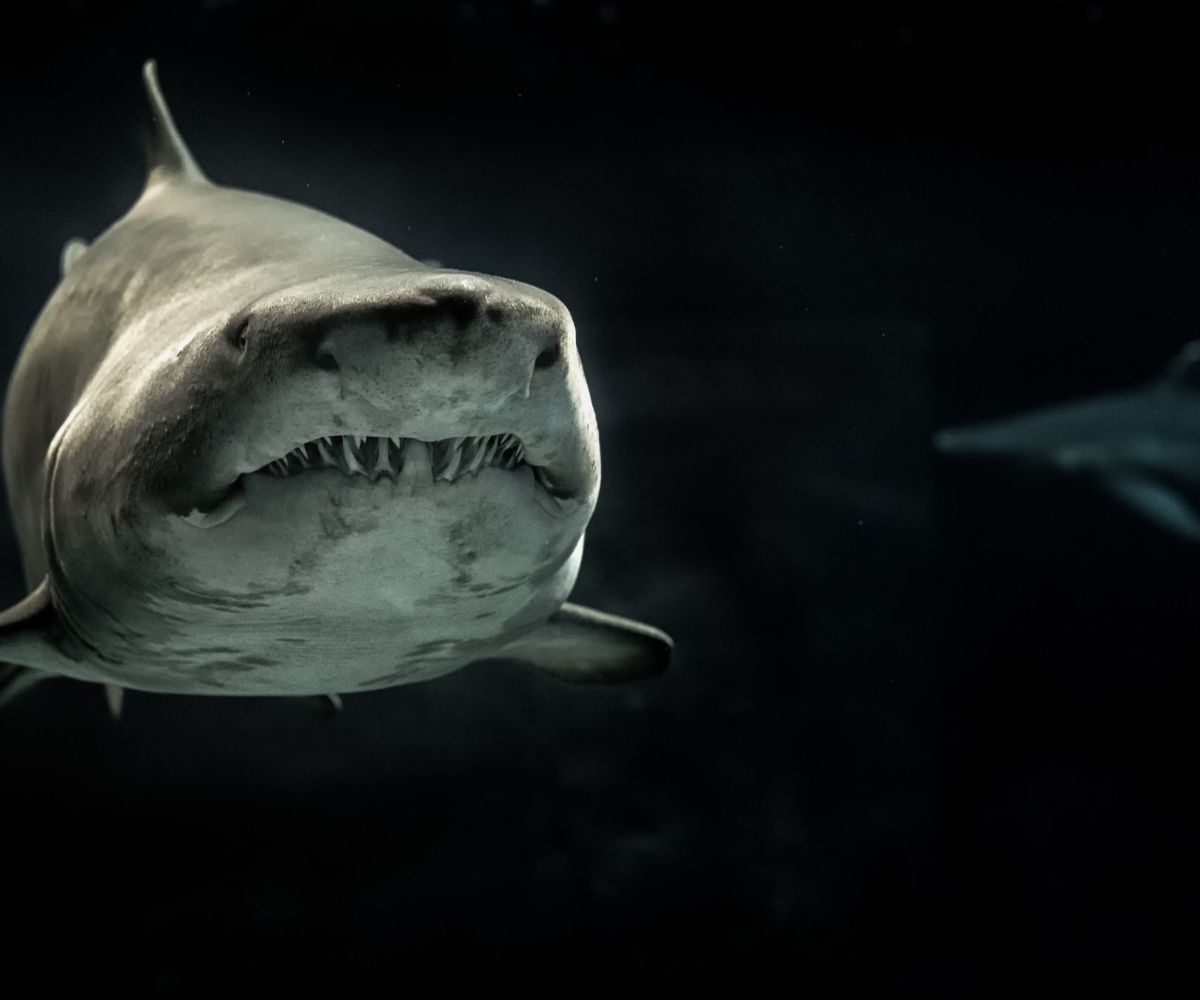
How many of you have read about shark attacks in your local newspapers or seen a news station cover a story about an attack? They do a lot of interviews for those stories. They talk to the victim’s family and friends, witnesses, lifeguards and if possible the victim themselves. However, they always fail to interview the most important character in this incident, they don’t interview the shark! Ok, it may admittedly be a little difficult to interview a shark, but they don’t make much of an effort to accurately represent the shark. I say accurately here because they do represent the shark, as a mindless blood-thirsty killer that was looking for a poor surfer to chomp. This couldn’t be farther from the truth. They only do this because fear sells. I’m pretty sure that might be the first thing that some of these reporters learn when they go to university to study journalism. The truth behind most of these attacks is that they’re merely investigations by the shark on a foreign object to its environment. If we could interview the shark it would probably say something like “Well, there was this thing floating on the surface and I just wanted to figure out what it was. So I just lightly bit it to see if it was in fact edible, but it tasted absolutely disgusting. It’s probably one of the last things I would want to eat, so I just left it there to find something that tasted a little better”. White sharks are by nature very curious creatures. I’ve seen a white shark investigate a piece of kelp floating in the water not more than a half meter away from the bait, which was two very ripe tuna heads. The thing is that white sharks don’t have hands to investigate things with. They primarily use sight and taste to investigate things. So in reality a white shark “attack” is an investigation by the shark. The only reason why it is so devastating is because of the 300+ razor sharp teeth in their mouths. Being humans we are naturally soft and squishy. Soft and squishy doesn’t exactly go well with razor sharp and pointy, so even a light bite can have devastating consequences for us. But if you actually look through the records only very few times does the shark actually come back and continue biting the victim and actually consume the person. Most deaths actually occur from shock, bleeding out or just drowning; not actually getting eaten by the shark. Read more »

If you liked this post, please share :)
Categories: Shark Facts, Shark Lady Adventures | Tags: , , , , , , , | Leave a comment

White Shark Hierarchy: Which Shark Reigns Supreme?

IMG_2117

Two sharks sizing each other up.

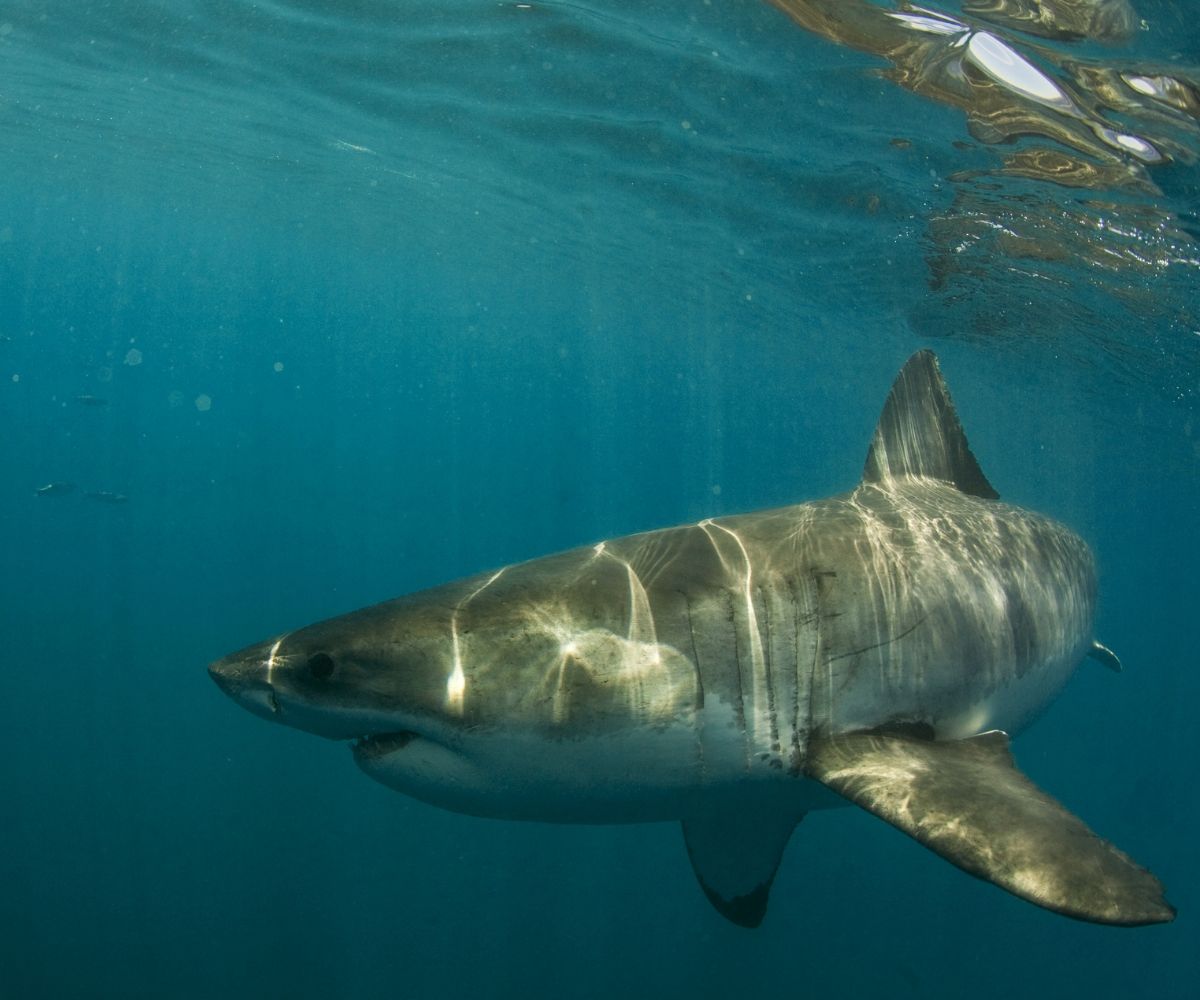
We’re all familiar with shark feeding frenzies. Get a bunch of sharks together in the same area, throw some food in the water, and watch chaos ensue with just a hint of madness thrown in for flavour. In fact when people hear the word shark it is quite often one of the first things that pop into their heads, apart from JAWS of course. But have you ever wondered why we never see any pictures or videos of white shark feeding frenzies? Is it because it was so intense that the camera men just never made it out? Actually the answer may surprise you. There is no footage of a white shark feeding frenzy because they never happen. In fact when there is a group of white sharks in an area with a ready source of food, white sharks are rather diplomatic with how they procede to eat the food. They may even be more diplomatic than some politicians.  Read more »

If you liked this post, please share :)
Categories: Uncategorized | Leave a comment

Parasites: Small, Stubborn, and Sometimes Creepy

IMG_3980

You can see a cluster of parasitic copepods on the shark’s nose and out the back of its last gill slit.

To many, white sharks are the big bad king of the oceans. Nobody messes with them, not unless they want a big chunk taken out of them. This, however, is a fallacy  and for more reasons than one. Today I will be talking about a unique set of organisms that completely uses white sharks for their own gain without giving anything back to the shark. In scientific terms this is known as a parasitic relationship. There are a lot of organisms that utilize a parasitic relationship to survive. We have all been warned to thoroughly cook pork, for example, least we get tapeworms. Well, tapeworms, and in fact many worms that we worry about getting into our bodies (round worms and flukes), are a category of parasitic worms that can invade our bodies and usually live in our intestines absorbing nutrients from the food we eat while giving nothing back to us.

White sharks suffer the same problems, only with different species than what affects us. One of the more common parasites on white sharks is Pandarus satyrus. These are a type of copepod that will latch onto the surface of white sharks and hitch a ride on the shark. They are usually found on the trailing edges of fins, in the gills, reproductive organs for females and the snout. They are large enough to be seen by the naked eye and can even be used by researchers to identify different individuals based on the amount and location of the parasites.

We can identify individuals based on the size and location of parasite clusters.

We can identify individuals based on the size and location of parasite clusters.

White sharks, like many other animals on this planet, are also susceptible to worms. There is a species of worm, Clistobothrium carcharodoni, that uses dolphins to get into its white shark host. They will actually localize themselves on the tail, back, belly and groin regions of dolphins. This isn’t by chance either. These happen to be the sites that white sharks target when attacking dolphins and seem to be some of the first areas of the dolphin the shark consumes. Thus, their location on the dolphin actually increases the chances they get consumed by the shark and can then take up residency inside the shark. You can read more about it here.

On a similar topic, though it doesn’t affect sharks, there is an isopod that can successfully replace a fish’s tongue. This parasite enters the fish through its gill slits and attaches itself to the base of the fish’s tongue. It’ll then draw blood from the fish’s tongue, slowly causing it to atrophy until the tongue eventually withers away. The parasite will then attach itself to the muscles of the base of the tongue and the fish can essentially use the parasite like a new tongue. This is the only known case in the world where a parasite can functionally replace an organ in its host.

If you liked this post, please share :)
Categories: Uncategorized | Leave a comment

Getting the Picture of a Lifetime

Timing is everything in this game.

Timing is everything in this game.

With my current project of taking pictures of dorsal fins to later catalogue I am afforded many opportunities to practice my photography skills. And after three months of practice almost every day out on the water, I’m finally starting to get some good pictures out there. Now that we’re heading into winter, it’s going to be prime photographing conditions for white sharks. Given this in mind I do see a lot of people out on the water who don’t know how their camera works. Some of them even look like they’ve just bought the camera right before they left on vacation and only took it out of the box to charge the battery. So I’m writing up this tutorial for both beginner and advanced photographers alike.  Read more »

If you liked this post, please share :)
Categories: Uncategorized | Leave a comment

White Shark Breaches: The Aerial Breach

Hello, and welcome to the concluding post of the White Shark Breaches Trilogy. The last style is known as the aerial breach, and is perhaps the most spectacular breaching style that the white shark uses. This type of breach involves the shark stalking its prey from below and usually from the side or behind as well. The shark then rushes the target with everything it has. By the time the shark has reached its target it could be traveling at 45 or 50 km/h. At this point the shark is carrying a lot of momentum behind it, and will impart a great deal of that energy into its target. This means that as long as the shark hits its mark it will have a very good chance of killing its prey, or at least stunning it.

Read more »

If you liked this post, please share :)
Categories: Shark Facts | Tags: , , , | Leave a comment

White Shark Breaches: The Polaris Breach

IMG_1954Welcome to part 2 of the trilogy of white shark breaches. Recently I talked about the surface breach. It’s a relatively shallow breach utilised by white sharks when visibility is not great or when their prey is actively trying to escape them. Now lets jump to the other end of the spectrum of breaches; all the way to the polaris breach.  This breach gets its name by the way that white sharks will come vertically out of the water (much like a polaris missile fired by submarines). This is their go-to style when they want to take anything that’s hanging around at the surface completely by surprise. I say anything, because I’ve seen sharks breach on things that aren’t even in its diet. I’ve seen a shark breach on birds, kelp and even jellyfish. I’m pretty sure the shark got a nasty surprise on that last one.

This type of breach requires fairly clear water for the shark to be able to see its intended target. In clear water a shark that’s hunting will usually patrol along the seafloor looking up for silhouettes of potential prey. When the shark has selected its target it may stalk its prey waiting for the right moment to strike, or it may launch an attack right then and there. It will come straight up and impact its prey with such force, that even if it doesn’t get its jaws around its victim, the victim will probably be momentarily stunned. If the water is deep enough the shark may have enough running room it will become completely airborne in what is known as an aerial breach, but I’ll talk about that more in my next post.

IMG_3500As you can see, the mechanics of this style of breach are quite simple. However, as with most things in life, it’s easy to learn, but it takes a lifetime to master. There are quite a bit of variables that the shark must account for using this technique. The shark must be able to accurately predict its target’s movements. It must know how to respond if the target makes an unexpected move, even fractions of a second before impact. Cape fur seals commonly avoid fatal attacks because they see the shark coming (or at least the glint of its teeth and bright white belly) and can comprehend and manoeuvre their bodies to only get a glancing blow, which may not even stun the seal. If they can do this, the advantage immediately switches to the seal, as they are generally moreagile than the shark. If the polaris attack fails then the shark may either give up, or attempt a surface breach. In my time working with Sharklady Adventures, I’ve really only seen the larger sharks preform this breach, and by larger I mean 3m and up. This may allude to the experience needed to successfully pull this off, as it is generally the older sharks that are the ones I’ve seen attempt this. That doesn’t necessarily mean that the younger ones don’t do this, though. I’ve yet to work on the boat during the winter,

IMG_4940when the water is at its clearest. Due to the increased visibility, we will start to see more of this style of breach, which may be when the younger sharks start to practice.

Whether the shark hits its mark or not, this is a very beautiful breach. This is where a sharks personality starts to show through. I’ve seen sharks come exploding out of the water, determined to get the bait at all costs. I’ve also seen sharks come sliding vertically out of the water, get halfway, kind of hover for a second and slip back into the water, barely making a splash. With such a variety of a seemingly simple breach being demonstrated, I am convinced that the sharks have refined their technique to the point of being an art.

If you liked this post, please share :)
Categories: Shark Facts, Uncategorized | Tags: , , , | Leave a comment

White Shark Breaches: The Surface Breach

IMG_3595cChances are, if you’ve watched Discovery Channel’s Shark Week in the past decade you know what I’m going to be talking about here, but just to get everyone on the same page, when I talk about a white shark breaching, I am talking about a white shark jumping mostly or entirely out of the water. There are three general types of breeches: the polaris breach, the surface breach and the aerial breach. In this post I’ll be focusing on the surface breach.

The surface breach is probably the least spectacular of the breaches (though, that’s not saying that this isn’t a truly spectacular event to witness), and is commonly seen during the summertime in Gansbaai. These attacks have shallow angles of attack and are usually limited by the water’s depth and potentially visibility as well. It is probably mostly the latter that limits most of the breaches seen in the Gansbaai summertime area since it is 12 meters deep (plenty deep for a steeper angle of attack). However, vertical visibility usually doesn’t exceed more than three meters, effectively making the water’s depth moot. Therefore the shark needs to be closer to its target. Since it’s so close to its prey, the shark wouldn’t be able to effectively manoeuvre from a horizontal position to a vertical position in such a short distance, so it just attacks its prey in a more horizontal position, hence the shallow angle of attack.

Read more »

If you liked this post, please share :)
Categories: Shark Facts, Uncategorized | Tags: , , , , , , | Leave a comment

Why the Shark Really Went in the Cage

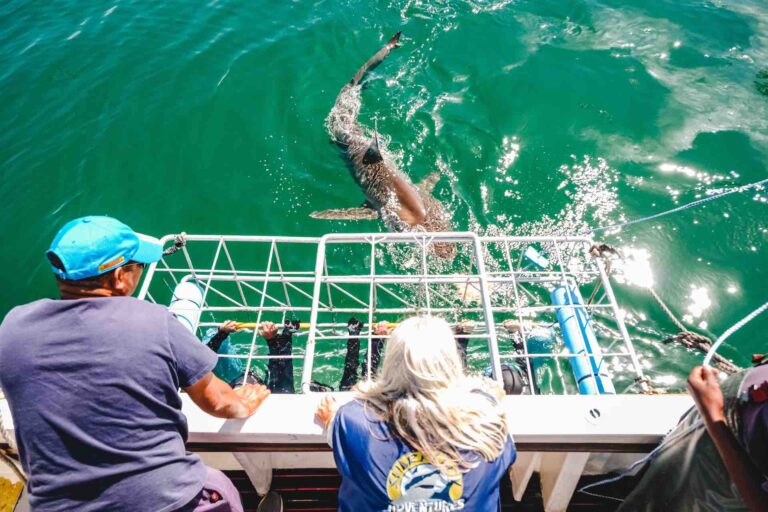
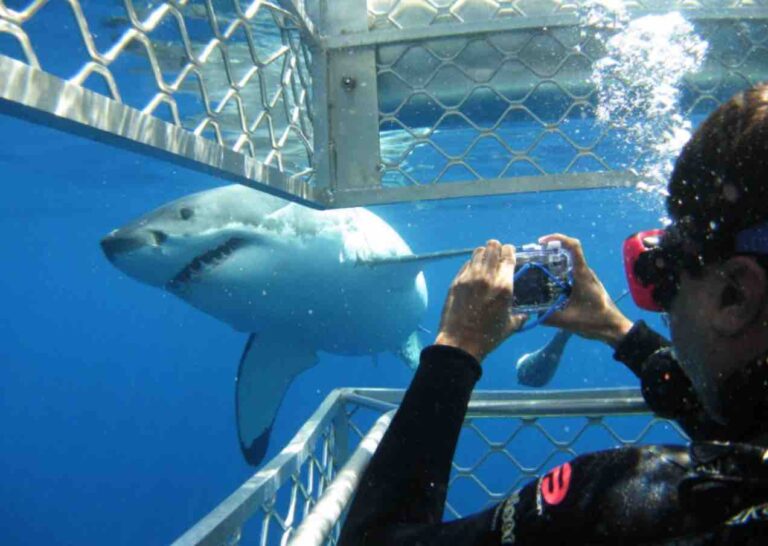
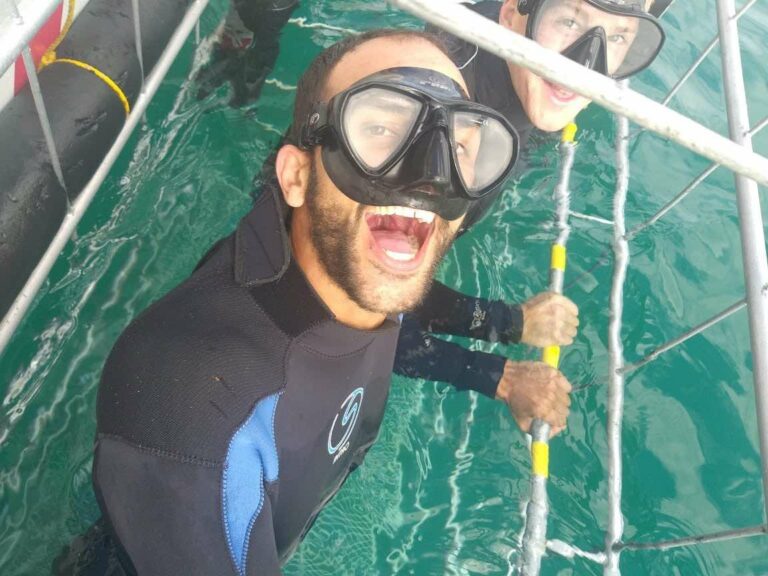
So, over the past couple of weeks I’ve had to do a bit of damage control over this whole “The-shark-went-in-the-cage-to-attack-the-tourists” thing, and recently while viewing the video with the Sharklady we both came across some evidence that supports our proposed theory as to why this incident happened. This evidence was only on the screen for a split second so it was very easy to overlook, especially when we were busy getting attacked from all angles by activists against cage diving. We were basically walking around with a target on our backs for a while. We did explain the incident in some video comments. One can be seen here. We’re the poster Sharklady Says. I’m writing this post to finally put to bed all the stories of the shark attacking the divers in the cage. This is most likely the reasoning behind the sharks actions. Read more »

If you liked this post, please share :)
Categories: Shark Facts, Sharks in the News | Tags: , , , , | Leave a comment

Shark of the Week: Whale Shark

It’s a whale! No it’s a fish! No! It’s a… whale shark? Yes, that’s right. The largest fish in the ocean is in fact a shark! This behemoth commonly reaches sizes of up to 12 meters and weigh up to 21.5 tonnes! Thats twice as long as the largest white shark and more than ten times its weight. But surely the whale shark must have a monstrous appetite. I mean if it’s that much bigger than the white shark, and those eat sea lions (cape fur seals are actually sea lions, contrary to their namesake), then whale sharks must eat things the size of … well, whales, right? Actually the largest fish in the ocean survives solely on some of the smallest things in the ocean.  They mostly eat krill and plankton. How can they do this, you ask. Well the whale shark ingests large volumes of water either by swimming with it’s mouth open or by actually sucking in the water. The water then goes to the gills, but not before passing over filtering pads. These pads filter out all plankton and the shark gets an easy meal. Looking at the mouth of a whale shark, you may think that it has no teeth; that evolution has caused them to lose them all. Well, evolution did play a role in this, but it didn’t cause them to lose their teeth, they’re just really small. They’re so small that they don’t even have a use anymore. So believe it or not there are sharks out there that don’t use their teeth (The basking shark is another example of a shark that doesn’t use its teeth).

Read more »

If you liked this post, please share :)
Categories: Uncategorized | Leave a comment

What Ocearch is really about

Most people know who Ocaerch is. They are the self proclaimed Shark Wranglers (the name should give hints as to their true motives) on the NatGeo channel. But how many of us know what’s really going on behind the cameras? Sadly the general public still remains ill informed about what these people do.

If you ask any white shark researcher you will probably get an earful about how these men are not real researchers (they are just glorified fishermen going after “the big one”) and how their ‘state of the art’ tags are really doing more harm than good and how the two previous head researchers have actually distanced themselves from Ocearch. They’ve already admitted they killed 3 sharks, how many more deaths have they swept under the rug? Read more »

If you liked this post, please share :)
Categories: Uncategorized | Leave a comment